Hydra'che
The hydra'che Underwater Base: Responsible Ocean Exploration
The hydra'che Underwater Base is an innovative exploration station, installed at a depth of 20 meters and designed to study marine ecosystems while minimizing its impact on the environment. This unique project combines science, sustainability and technology to better understand and protect our oceans.
An underwater laboratory serving research
The hydra'che base is first and foremost a scientific station dedicated to studying shallow marine environments, where ecosystems essential to biodiversity develop. These coastal and reef areas are home to rich wildlife and plant life, but are often threatened by human activities such as pollution, climate change and overfishing.
Monitoring marine ecosystems
Thanks to a network of advanced environmental sensors, hydra'che continuously collects data on:
- Water temperature and how it changes.
- Dissolved oxygen levels, crucial for marine life.
- Acidity and salinity, indicators of climate change.
- Ocean currents and the dynamics of water masses.
- Microplastic pollution and the presence of contaminants.
This information allows scientists to better understand the impact of human activities on these sensitive areas and to identify solutions to protect them.
Observing and tracking marine species
At a depth of 20 meters, the hydra'che base sits in an environment rich in biodiversity. It makes it possible to study emblematic species such as:
- The grouper, a key predator of the reefs.
- The parrotfish, essential to the regeneration of corals.
- The stingray, an indicator of habitat quality.
- The cleaner wrasse, whose behavior helps us understand symbiotic relationships underwater.
Thanks to high-resolution underwater cameras and tracking tags, hydra'che makes it possible to analyze the behavior, movements and interactions of these species in their natural environment.
Studying the resilience of coral reefs and seagrass meadows
Coral reefs and seagrass meadows play a fundamental role in the balance of the oceans, but they are threatened by bleaching and degradation. The hydra'che base makes it possible to:
- Study coral regrowth and identify the conditions that favor its restoration.
- Monitor seagrass meadows, which capture CO₂ and shelter many species.
- Test bio-inspired artificial structures, which allow corals to attach and marine habitats to be repopulated.
With this research, hydra'che contributes to the development of conservation and restoration strategies for underwater ecosystems.
Exploring the depths with underwater drones
Although the hydra'che base is anchored at a depth of 20 meters, it also serves as a launch platform for autonomous underwater drones, able to explore much deeper areas that divers cannot reach.
Drones for scientific research
These autonomous (AUV) or remotely operated (ROV) underwater vehicles make it possible to:
- Explore the abyss, down to several thousand meters deep.
- Map the seafloor, using high-precision sonars.
- Observe deep-sea wildlife, such as dragonfish, viperfish and the famous giant squid.
- Study hydrothermal vents, where species adapted to extreme conditions live.
Technology and innovation
The underwater drones used by hydra'che include advanced technologies such as:
- Ultra-high-resolution cameras, able to film in low light.
- Robotic arms, to collect samples of the seabed or of species.
- Chemical sensors, to analyze the composition of the water and detect anomalies.
- Bio-inspired propulsion systems, imitating the movement of fish for better energy efficiency.
A tool for protecting the oceans
By combining the data collected by the hydra'che base and the underwater drones, researchers can better understand:
- The impact of climate change on the seabed.
- Species migrations between different depths.
- The state of deep ecosystems that are still little known.
An innovative design that respects the oceans
Designed to adapt to underwater conditions, the station has low energy consumption and uses materials that resist pressure and corrosion.
A technological innovation center
Hydra'che also serves as a platform to test new bio-inspired technologies, including underwater robots imitating the movement of fish, coatings inspired by natural camouflage, and bioluminescence sensors.
App and game
To represent our idea, we made an app that takes the data from several sensors and displays it.
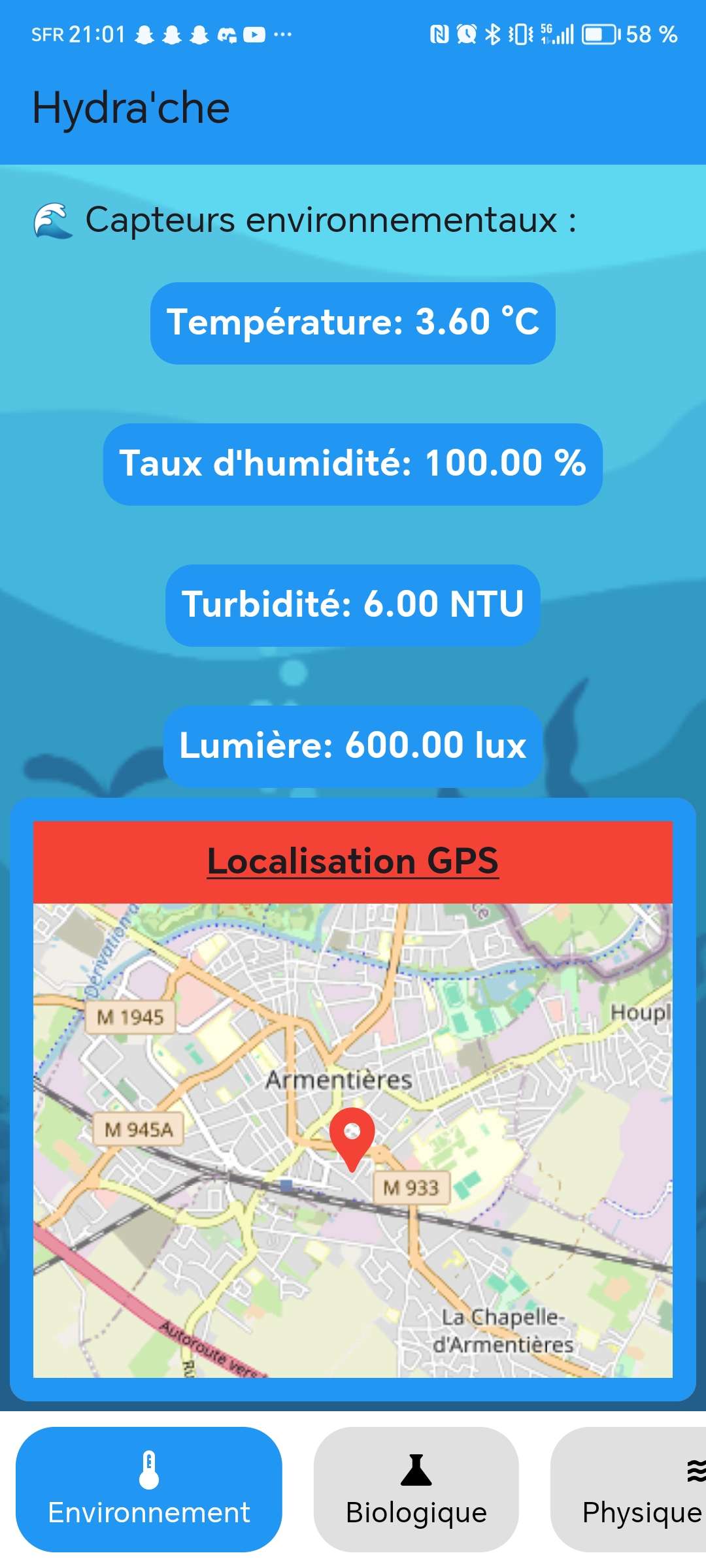
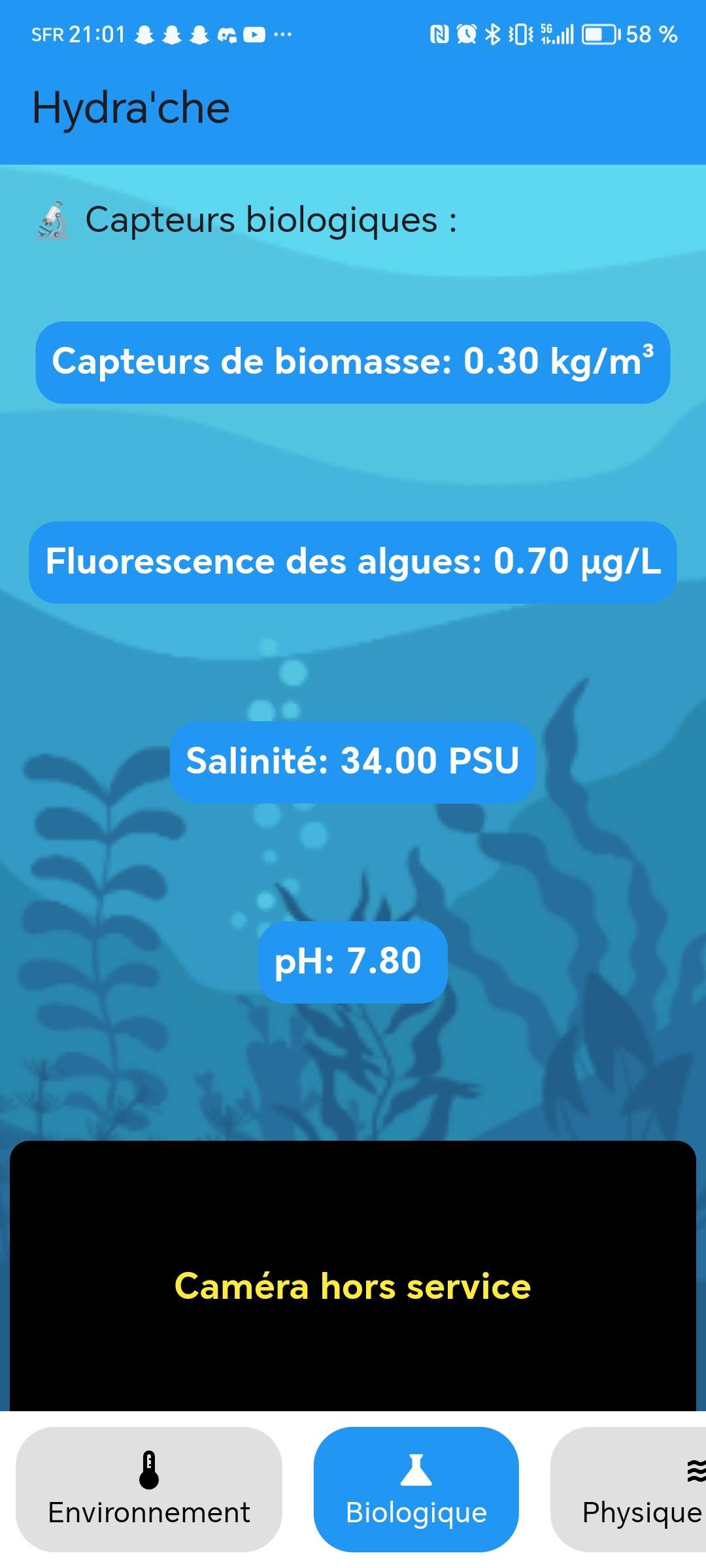
We also made a game, here are a few pictures:
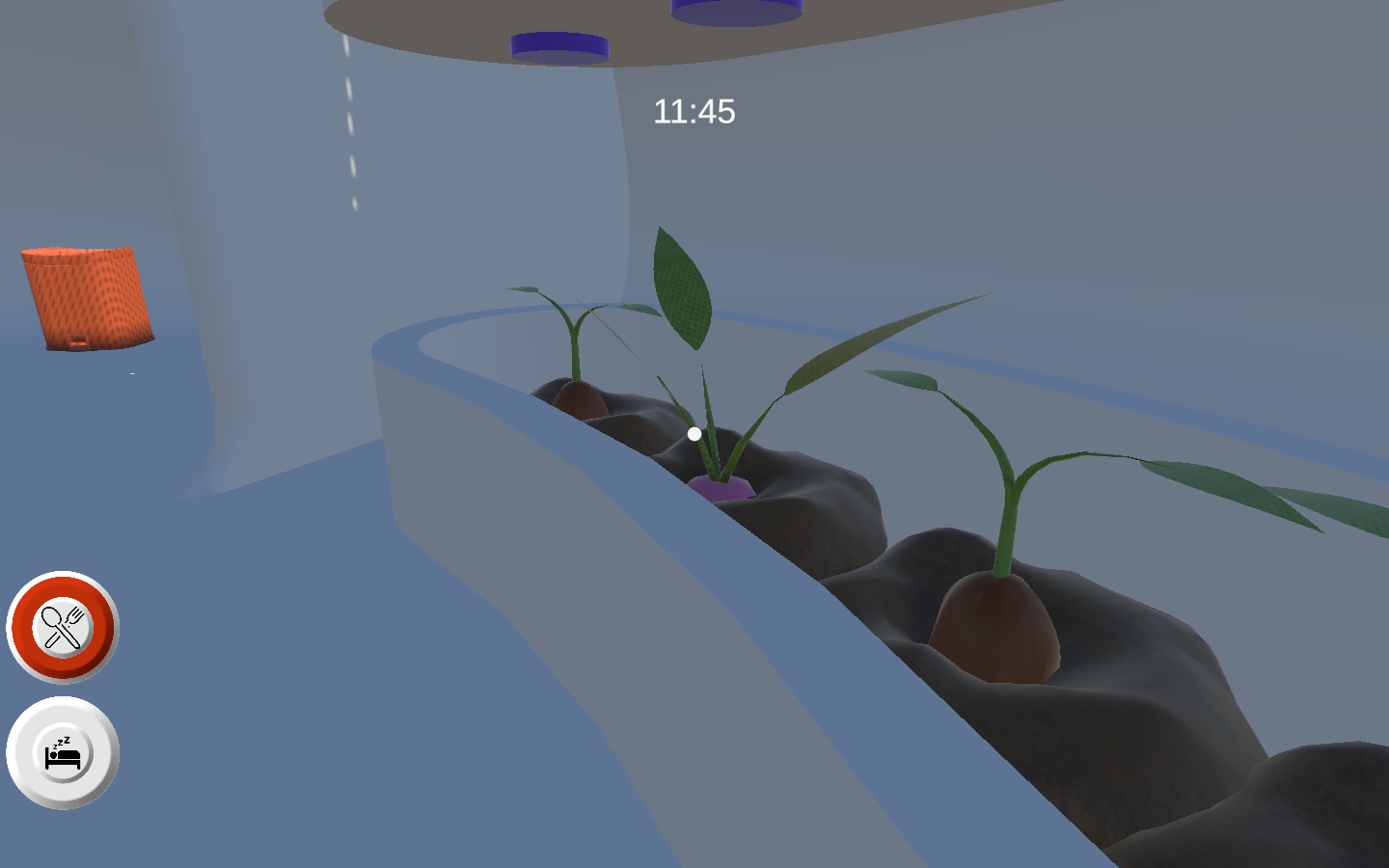
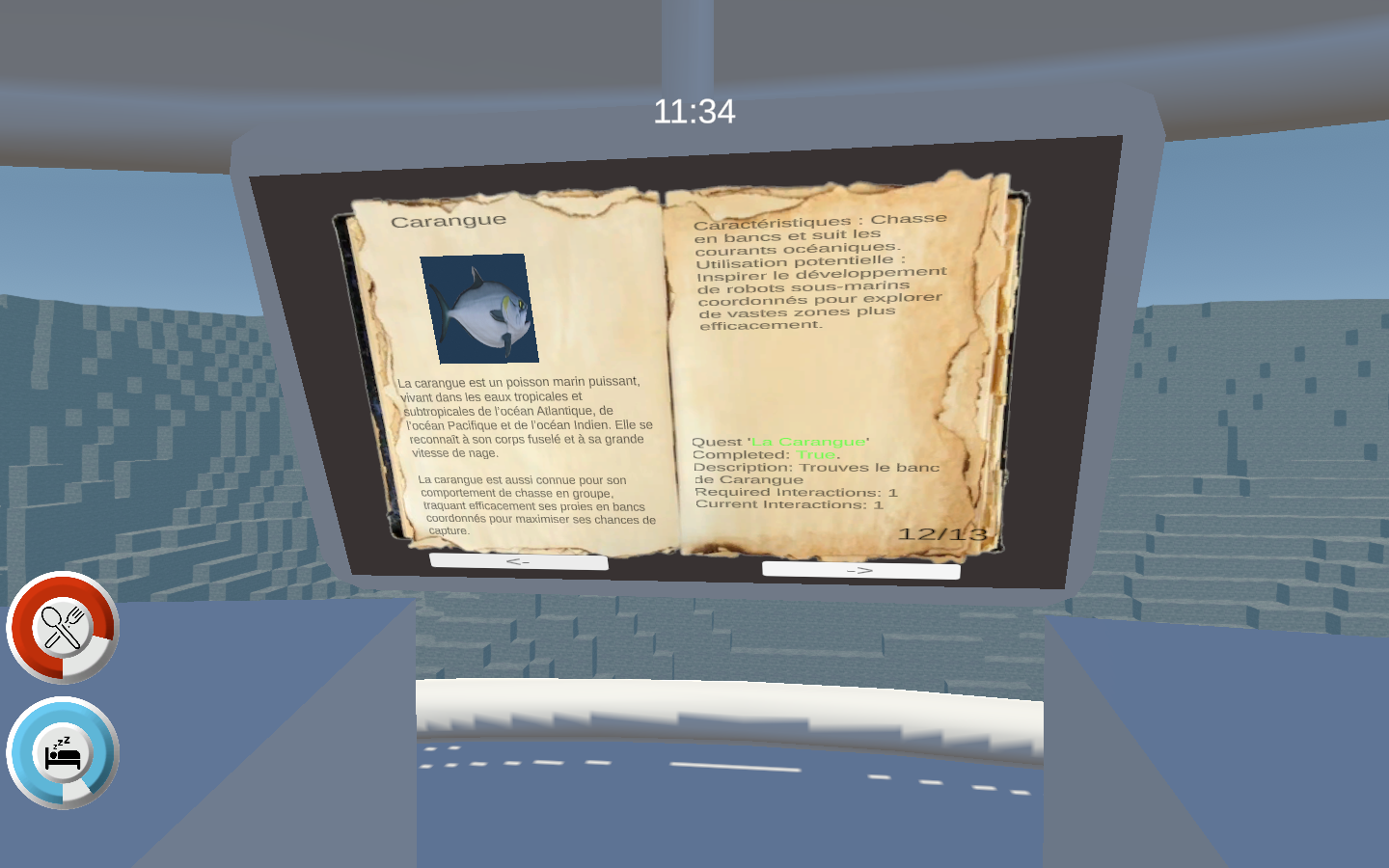
Dive with us into a new era of marine exploration!